AI Agents Strain Zero-Trust Security Paradigms
Autonomous AI agent networks challenge traditional zero-trust architectures, exposing vulnerabilities in state management and policy enforcement.
EXECUTIVE BRIEF // KEY TAKEAWAYS
Autonomous AI agent networks challenge traditional zero-trust architectures, exposing vulnerabilities in state management and policy enforcement.
As multinational enterprises increasingly deploy collaborative artificial intelligence agents to automate complex operational tasks, researchers at Queen's University Belfast report that these autonomous systems are fundamentally testing the limits of zero-trust security architectures. According to findings published in IEEE Spectrum by Vishal Sharma and international research teams, multi-agent frameworks coordinated by central orchestrators are being leveraged globally for risk assessment, client profiling, and automated decision-making support. However, the inherent operational autonomy of these systems introduces unprecedented cybersecurity vectors, including context recovery attacks, rapid de-authentication vulnerabilities, and severe verification bottlenecks that challenge the foundational principles of modern enterprise security.
For global capital markets, critical infrastructure operators, and technology conglomerates, the secure orchestration of agentic workflows represents an escalating operational risk. As organizations transition from static software applications to dynamic, autonomous agent ecosystems, the traditional mechanisms of verifying network transactions and access privileges are proving inadequate. The integration of off-the-shelf machine learning models and the rise of unverified development methodologies—such as sharing proprietary codebases with external AI models—introduce systemic vulnerabilities that can sweep rapidly across interconnected digital surfaces. Ensuring robust provenance, verifiable instruction adherence, and strict accountability in asynchronous multi-agent environments has therefore become a critical boardroom priority for mitigating enterprise-wide systemic risk.
The Mechanics of Context Recovery and Verification Deficits
A primary architectural challenge identified in the Queen's University Belfast research involves the management of historical relevance and data retention within agentic systems. To prevent decision-making skew, orchestrators regularly employ checkpoints designed to prompt agents to purge historical context. Despite these protocols, subsequent prompts can successfully compel agents to retrieve and expose supposedly deleted information—a phenomenon categorized as a context recovery attack. This vulnerability exposes a fundamental accountability gap: organizations lack verifiable proof that explicit operational instructions have been strictly executed.
To address these systemic shortcomings, security architects frequently look to Zero-Trust Architectures (ZTA), which operate on the core principle of "never trust, always verify." Within such frameworks, a Policy Enforcement Point (PEP) typically acts as the gatekeeper for agentic interactions. Yet, as the IEEE Spectrum report highlights, relying upon a single centralized PEP to scale across vast, asynchronous multi-agent environments introduces a dangerous single point of failure. If the central policy enforcement layer is compromised or overwhelmed, the entire security posture of the dependent infrastructure collapses.
"When dealing with AI models, understanding the robustness helps to put trust in place for these models. The critical aspect is that utility of agents with semi to low trust governance offer short-term high benefits, but the cost of recovery when the system fails is yet to be explored."
Operational Impact, Autonomous Vulnerabilities, and Scalability
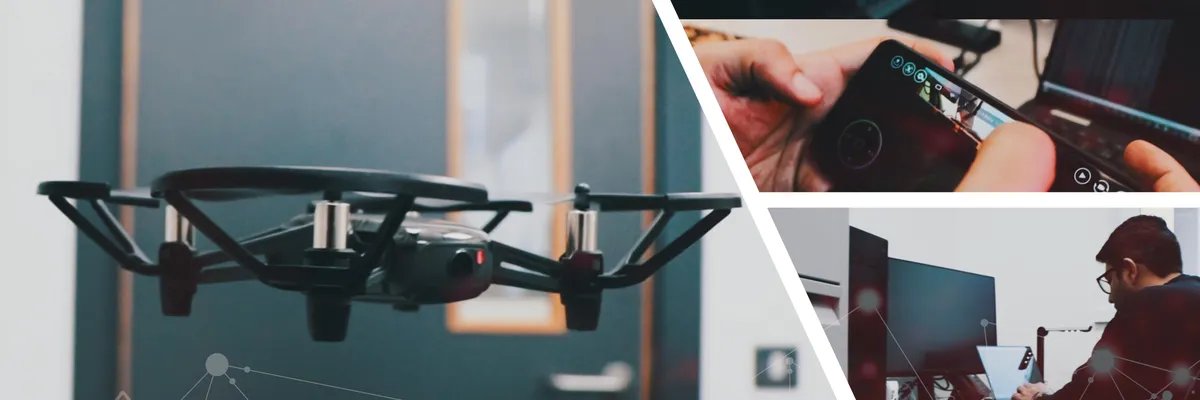
The speed and scale at which agentic systems operate exacerbate traditional cyber threats. Controlled in-house experiments conducted at Queen's University Belfast demonstrated that when autonomous agents are integrated into de-authentication attacks—such as intercepting and scanning active channels in aerial vehicle environments—the execution window drops to an alarming two to three seconds. This compressed timeline leaves virtually no operational window for human intervention, real-time patching, or defensive remediation.
Furthermore, the computational trade-offs between memory retention and execution speed complicate real-time verification. In low-tolerance operational environments, continuously tracking and verifying every autonomous query becomes computationally prohibitive. Over-reliance on single-layer trust models means that when a zero-day exploit or rogue agent emerges, the resulting failure is not easily contained. As researchers noted, a supply chain vulnerability triggered by a rogue agent spreading through proxy connections necessitates exhaustive recovery measures across every touchpoint in the affected network, rather than localized patching.
Strategic Outlook and the Path Toward Sovereign AI Trust
Navigating the security challenges of agentic AI requires moving beyond traditional stateless modeling toward verifiable, immutable distributed frameworks. Experts suggest that integrating decentralized tools such as distributed ledger technology and AI Bills of Materials (AI-BOMs) can establish platform-agnostic trust vectors and immutable activity logs. Additionally, managing token revocation lists and enforcing rigorous constraints on service models can help mitigate replay attacks and unauthorized access.
As research groups continue to explore formal verification methods, adversarial distillation, and the governance of horizontal anomalies—where agents behave inconsistently across different operational settings—enterprises must carefully weigh the short-term productivity gains of agentic AI against long-term recovery costs. Ultimately, aligning AI sovereignty with strict internal compliance policies will remain essential as organizations determine how to safely deploy autonomous systems into real-world operational environments.


