Agentic AI Drives 450% Traffic Surge, Straining Corporate Networks
Autonomous AI agents drive a 450% traffic surge, forcing enterprises to overhaul legacy networks and repatriate workloads, MIT Technology Review reports.
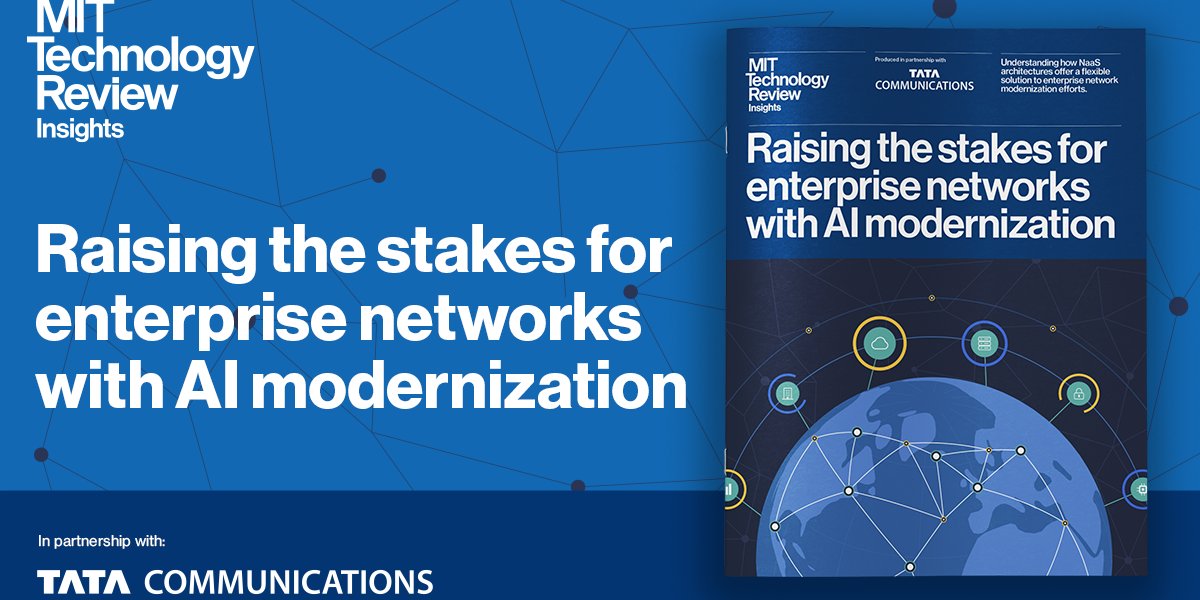
EXECUTIVE BRIEF // KEY TAKEAWAYS
Autonomous AI agents drive a 450% traffic surge, forcing enterprises to overhaul legacy networks and repatriate workloads, MIT Technology Review reports.
CAMBRIDGE, Mass. — Corporate communications backbones are facing unprecedented operational strain as enterprise deployments of autonomous artificial intelligence outpace underlying infrastructure capacity. Workloads initiated by agentic AI systems generate an estimated 450% more data traffic across internal networks than identical workflows performed by human personnel, according to an analytical report published by MIT Technology Review. The surge is compounding friction across corporate data architectures as organizations transition machine learning investments from centralized training facilities to real-time, production-grade applications.
The compounding bandwidth strain marks a pivotal inflection point for global corporate technology strategy and enterprise capital allocation. While chief information officers spent the prior decade migrating workloads to centralized public clouds, the latency sensitivities of production AI are forcing an abrupt reversal toward distributed on-premises and near-premises edge environments. With corporate competitiveness increasingly tied to sub-second inference speeds, network capacity has rapidly evolved from a passive utility into a primary operational bottleneck, exposing severe technological disparities between forward-looking enterprises and infrastructure laggards.
The Latency Imperative and the Reversal of Cloud Centralization
The operational divide separating network-ready enterprises from legacy organizations is widening rapidly under production pressures. According to research cited by MIT Technology Review, as few as half of all surveyed enterprises believe their existing internal networks possess the necessary bandwidth capacity and latency controls required to support enterprise AI deployments.
This systemic readiness gap stems from fundamental structural differences in how artificial intelligence models process data across their lifecycle. While the foundational training phase demands massive server-to-server data center clusters capable of ingesting vast historical datasets across centralized hyperscale facilities, production inference requires rapid low-latency connectivity situated adjacent to operational end-users. As the report published by MIT Technology Review observed:
“Training AI requires server-to-server data center architectures, while inference calls for low-latency connectivity close to users. Enterprises may need to fundamentally reconsider their network architecture to meet these requirements.”
Consequently, hosting real-time inference exclusively within distant hyperscale public clouds is proving both economically impractical and technically unfeasible for large multinational operators. Unpredictable transmission latency induces catastrophic downstream failures in deployed models, precipitating elevated queuing times, saturated graphics processing unit (GPU) cycles, and persistent data flow bottlenecks across the digital supply chain.
Operational Bottlenecks and the Network-as-a-Service Transition
The convergence of agentic AI traffic loads and decentralized inference models is laying bare deep technological vulnerabilities in legacy physical underlay networks. Unlike static human interactions, which produce predictable, episodic bursts of communication, autonomous agentic systems continuously poll, query, and synchronize across internal application programming interfaces, generating sustained data volumes that can overwhelm legacy routing protocols.
To navigate these physical bottlenecks without enduring recurring capital-intensive infrastructure overhauls, the analysis emphasizes the adoption of Network-as-a-Service (NaaS) architectures combined with AI-driven observability frameworks. Rather than approaching infrastructure upgrades as episodic capital projects, organizations are shifting toward software-defined operational frameworks that leverage automated provisioning, reusable design templates, and robust architectural governance.
By decoupling physical infrastructure management through flexible NaaS procurement, enterprise operators can scale network capacity dynamically to accommodate volatile agent-driven compute demands while simultaneously reducing aggregate operating expenses. Automated observability tools further mitigate administrative complexity by preemptively identifying routing congestion, dynamically balancing GPU loads, and optimizing data transport routes before latency variations degrade customer-facing services.
Strategic Outlook and Emerging Sovereign AI Mandates
Beyond technical and architectural hurdles, multinational corporations confront escalating geopolitical and regulatory friction that will dictate future network design. A proliferation of data sovereignty legislation across global jurisdictions is increasingly mandating that both proprietary enterprise data and underlying AI model execution remain confined within specific national borders.
These strict regulatory frameworks run counter to conventional multinational operational models, which historically relied upon borderless data flows and consolidated regional processing hubs. Global enterprises now face the costly imperative of architecting sovereign-capable, localized network infrastructure across each geographic market in which they operate. Adapting to this decentralized regulatory landscape will require substantial sustained capital investment, rigorous data governance controls, and modernized network architectures capable of orchestrating localized compliance without fragmenting global enterprise operations.


